-
Invite your party
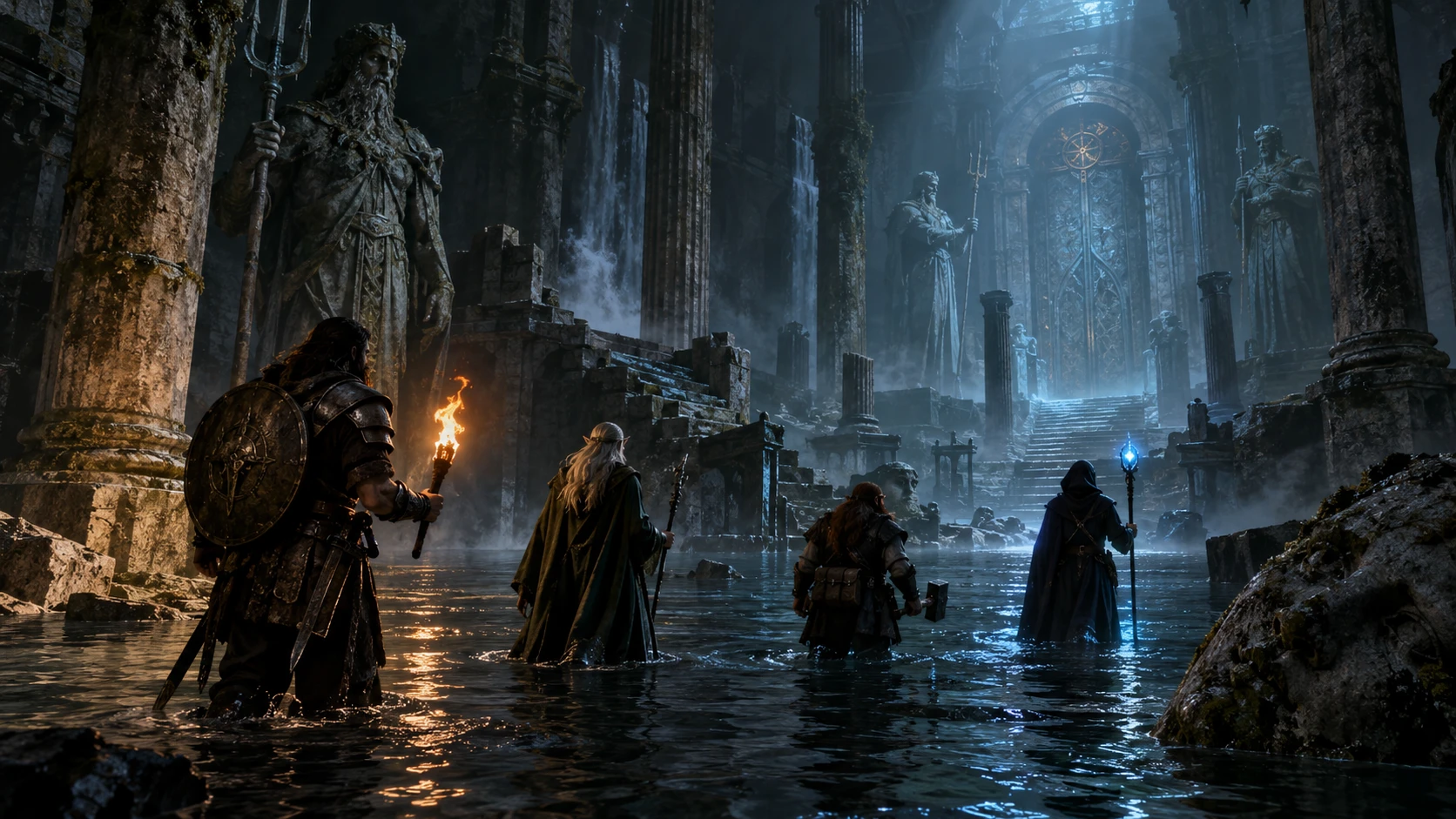
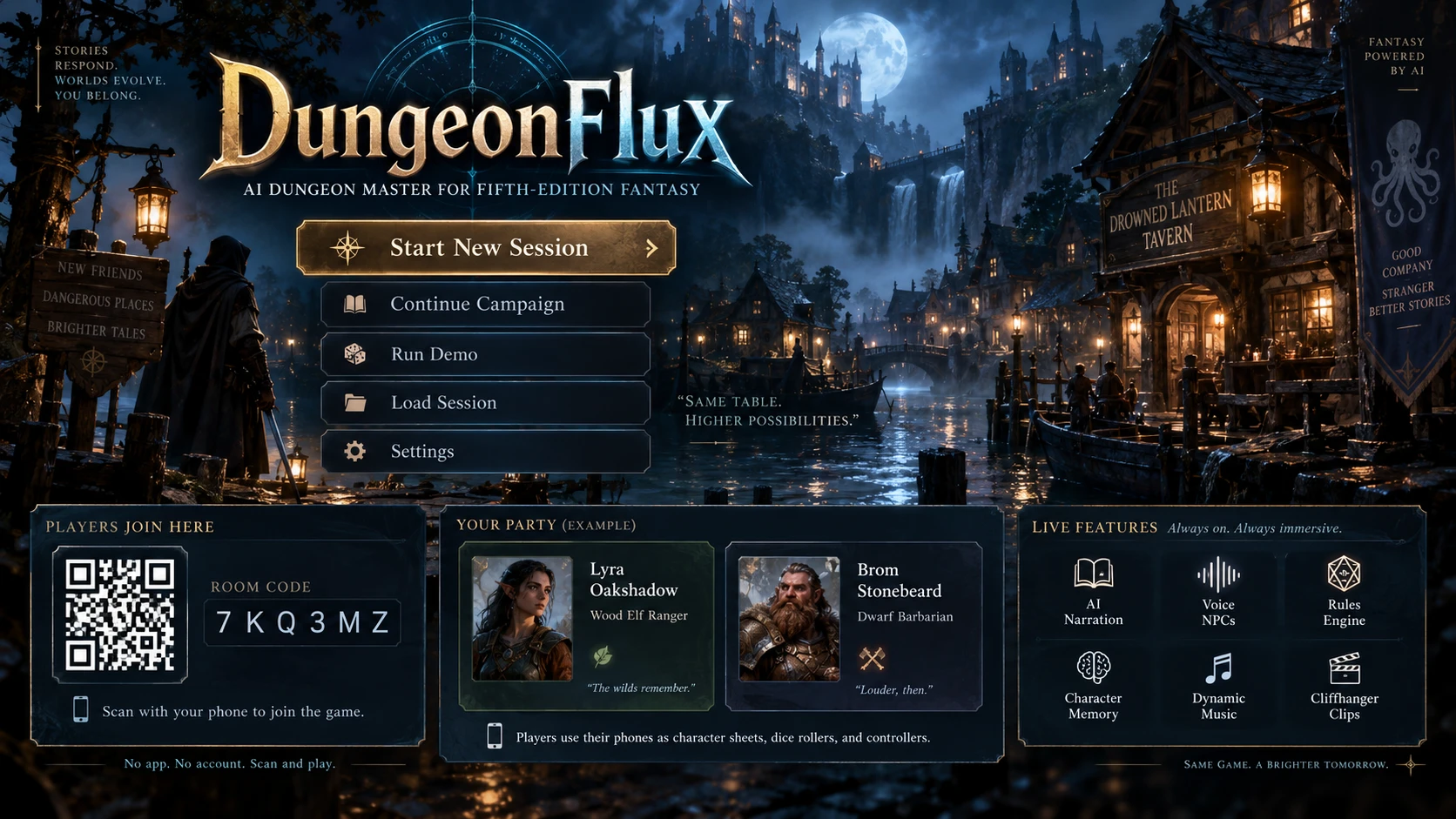
The host signs in, creates a campaign, and picks the adventure, the rules and the number of players. Creating a campaign is free. The host then shares an invite link, or players type the room code shown on the TV.
Each player signs in, picks a hero or brings one they saved earlier, and marks themselves ready.
-
Fund the table and set a budget
Play is planned to be paid for with DungeonFlux service credit. When the early-access pilot opens, new accounts will get $10 of promotional credit to try it, subject to the final terms. Anyone at the table can add more, and each person decides how much of their own credit to put toward tonight. Credit is never handed to the host.
The host sets how much the table may spend per hour and for the whole session. Raising the table’s limit never raises what any one person has agreed to.
Example: three people share an $8 session Person Put in Share of $8 Returned Host $20.00 $4.00 $16.00 Player B $10.00 $2.00 $8.00 Player C $10.00 $2.00 $8.00 Total $40.00 $8.00 $32.00 Illustrative example. Shares follow what each person authorised: 20, 10 and 10 gives 50%, 25% and 25%. Unused amounts go back to each person’s own credit, not to the host.
-
Play on the TV and your phones
The host links the TV to the table with a short code that works once and expires. The adventure plays on the shared screen. Private details, such as your character sheet and your choices, appear only on your own phone.
Say what your hero does, or type it. The rules engine rolls the dice on the server, the TV shows roll results, and the Dungeon Master narrates what the dice decided. The host’s phone shows a small budget bar with the pot, anything held for work in progress, and the hourly limit.
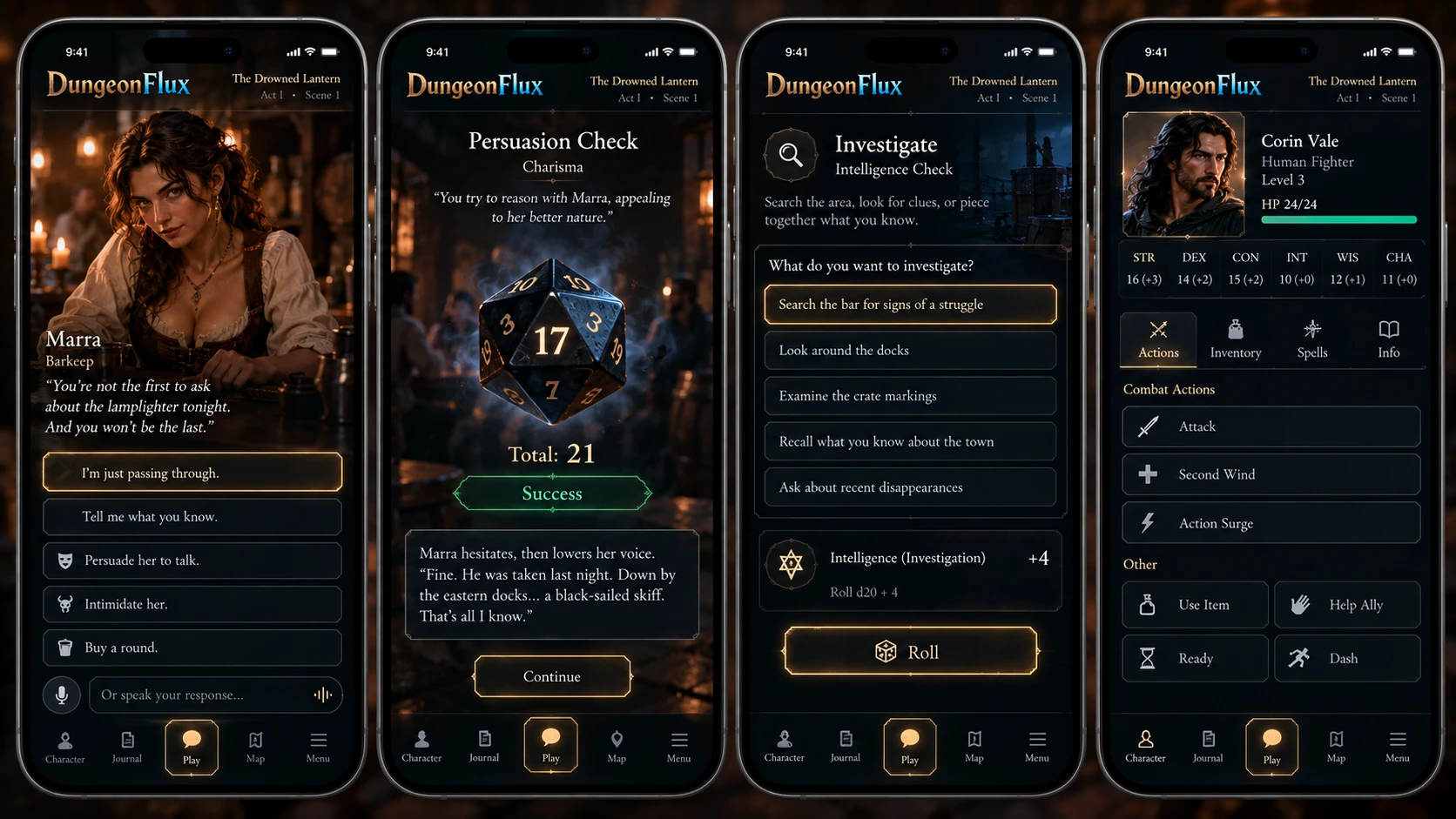
Player phone screens from our early-access design. The live game may differ. -
Save, settle and come back
The screen says Saved only after your progress is safely stored. When the host ends the session, the clock stops, unused credit returns to the people who put it in, and each person can see a statement of what was used.
Next time the same heroes and the same story resume where you left off. If the balance reaches zero, the table pauses and the campaign stays intact. Nothing is deleted because credit ran out.
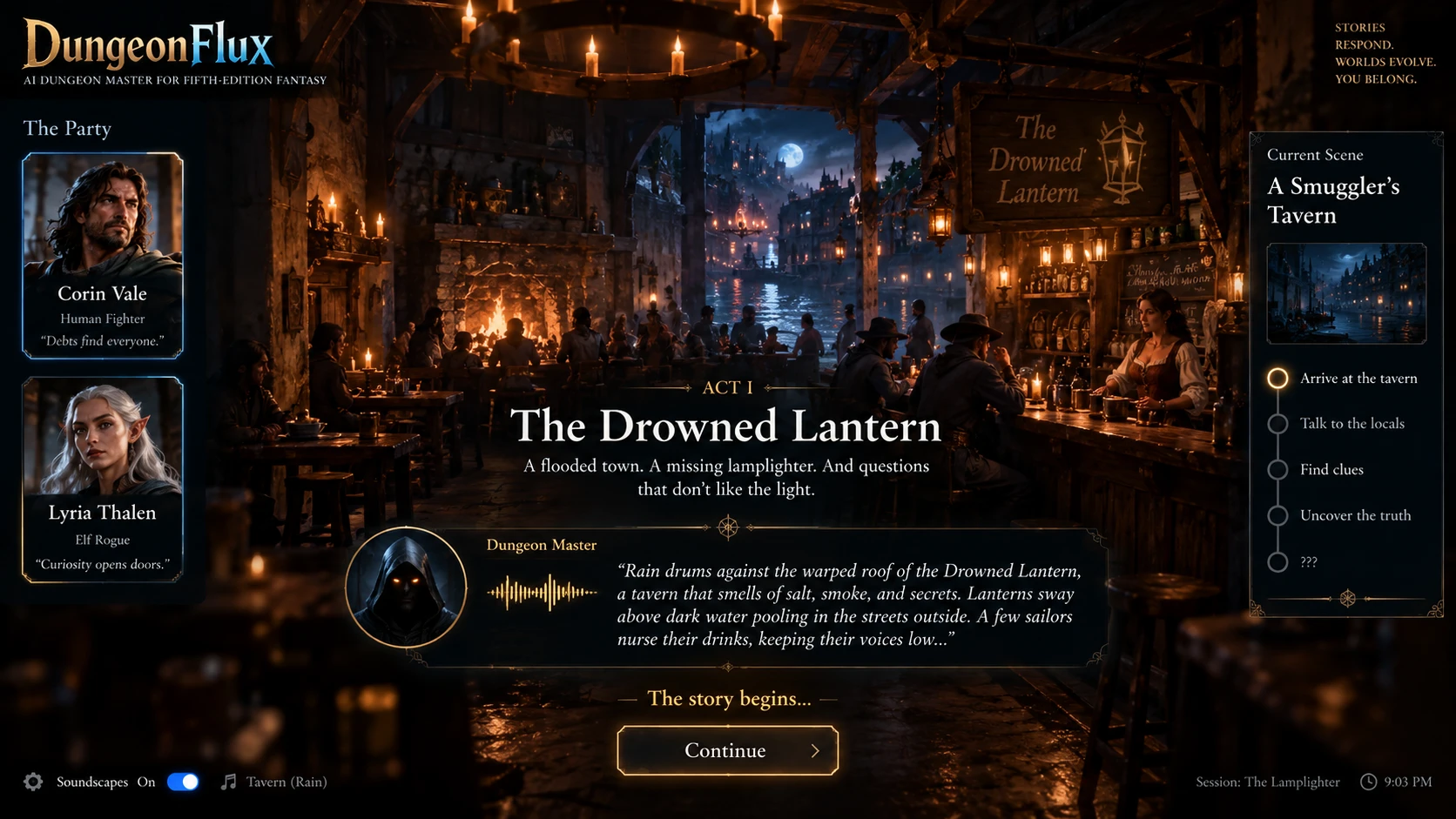
TV screen from our early-access design. The live game may differ.
What the pilot covers
The first release is planned around one well-tested adventure or bounded free-roam experience, for two to six players depending on what testing supports. We will state the largest party we have actually tested on the rules page, and we will not claim more than that.
Subscriptions, automatic top-ups, cash transfers between players and public matchmaking are not part of the pilot.
Ready to try a table?
When the early-access pilot opens, new accounts will get $10 of promotional credit, subject to the final terms. No card is needed to start.